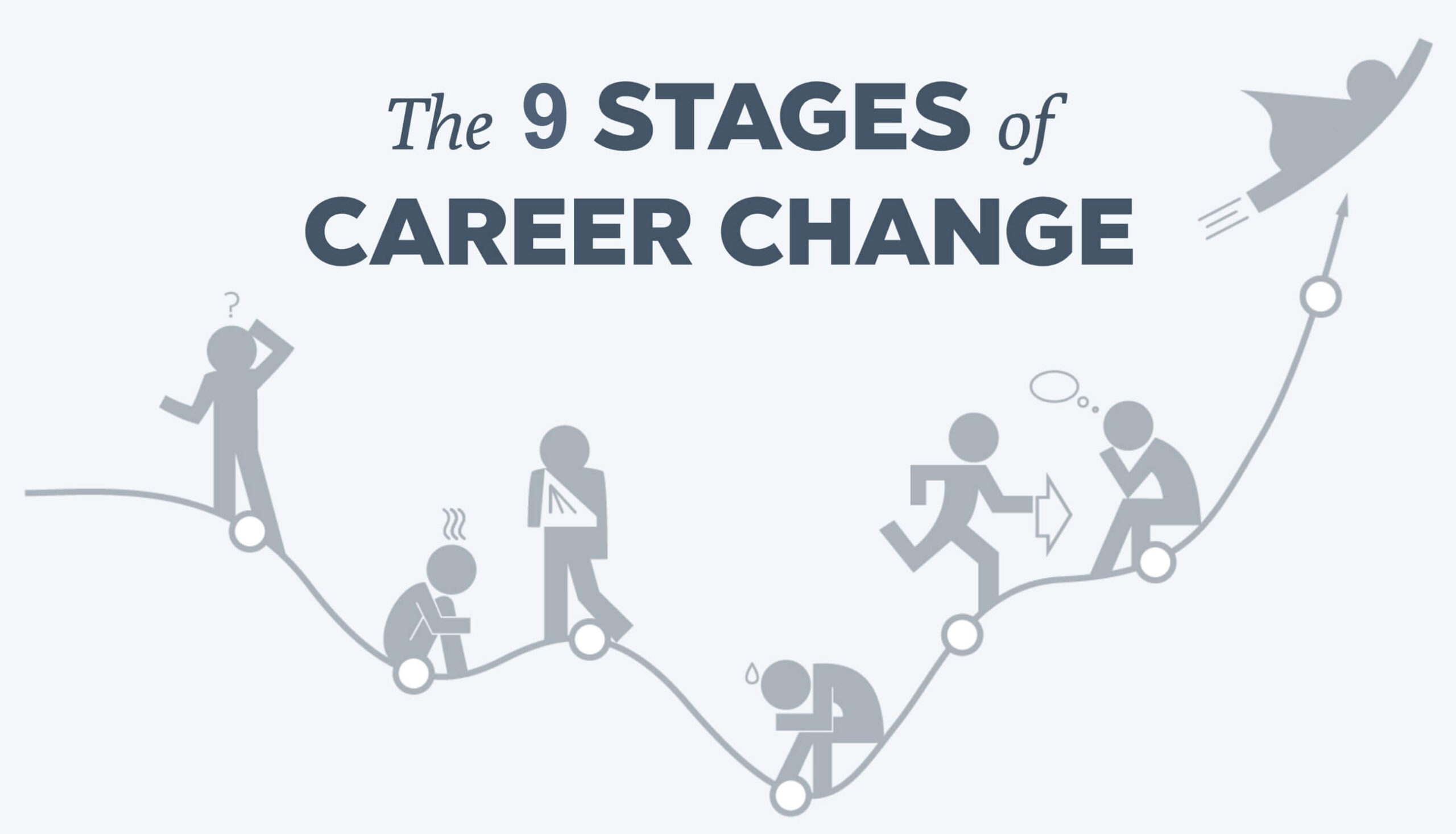
There are many reasons for changing careers. Among those that come up often, the working conditions that are not satisfactory, the desire to change to better develop and develop professionally and personally. Whatever the age at which the retraining takes place, it is important to anticipate events to be well prepared by defining a clear action plan to succeed in your professional project. When you plan to change your career the key to success lies mainly in planning, anticipation, and training. To learn more about the steps to follow before taking the big leap in a career change, read our tips for a successful career change:
Each individual’s career path is personal and unique. It’s extremely rare to see a clear professional path nowadays. We are all looking for a more fulfilling and meaningful professional activity at some point in our career – a job that matches our values.
Are you thinking of changing profession, position, or city? Or are you planning on creating your own business? Are you wondering if a career change is a right move to make? Discover in this article the steps you need to take to have a successful career change!
Also read: Time To Leave and Change Your career – 5 Clear-Cut Signs
1. Take Insights
Before you plan to change your career, we advise you to take an overview of your current professional situation and needs.
Sometimes, all you need is to just change your work environment without taking another career path. It’s important to ask yourself this question: “Why do I want to change jobs?”
Is it because of your manager? Your colleagues? The tasks you have to complete? The ride to the office?
2. Analyze the recruitment market
If you are interested in a new business sector – but you are not familiar with it – we recommend you analyze it.
Try to learn more about this specific field and make sure it is enough flourishing. You can look at the offers available for your dream job or discover which are the greatest recruiters and the main companies in this field, for instance.
This step can avoid you to fall from a height.
Also read: How To Successfully Change Your Career Path (4 Easy Steps)
3. Meet other professionals
There’s another piece of advice: meet new people working in the field or occupying the position you’re aiming for.
You can participate in some recruitment events; job and training fairs, recruitment events, or subscribe to a newsletter specialized in some business sectors, for instance.
It will help you to ensure you want to work in this field now and to develop your business sector.
We only live once, so you might want to take the plunge.
4. Be humble
The fourth step you need to take when you plan to change your career is to be humble, as you’re going to be a newbie and a beginner in a specific business sector.
You’ll need to accept the different constraints linked to a fresh new start in your career – such as being paid like a junior, even if you’ve got more than 25 years of professional experience, and learning from your colleagues who might be younger than you, for instance.
Also read: 8 Best Jobs to Consider For a Career Change
5. Develop new skills
If you want to meet the criteria of the new business sector you’re aiming for, you can do a training course, sign up for classes or even go back to school, for instance.
You can acquire new competencies or develop and update the skills you already have, according to the position you want to occupy.
6. Consider a new position in your business sector
Why not enjoy your professional experience and your knowledge of your business sector to aim for a new position?
Considering a career development can be a good balance between your need for change and your professional knowledge.
When you plan to change your career, it it requires taking risks above all. We hope all of our tips will help you during this turning point in your professional life! Do not hesitate to share with us your experience.
7. Think about what motivates you first
Retraining can give a new dynamic to your career. Be convinced of your approach by establishing the challenges of a career change. This step allows you to establish the path you need to take to reach your goals, knowing that once you’ve made your decision, you need to prepare for the transition.
8. Establish an action plan
Embracing another career is a serious business. This is why you need a personalized overall plan that is based on your motivations and milestone objectives. All this planning will take into account the cost, training, financing, and availability aspects. These different elements will either be decisive or determine the decision to give up or continue to occupy your current position in the phase of transition to your new profession. It doesn’t matter if your plan isn’t perfect from the start, you can change it along the way. It is above all a question of defining its main lines.
9. Consider doing skills assessment
What can I do? What do I need to be successful in another profession? Which profession to choose? These are some of the important questions that this review of your professional skills should answer. An analysis of your strengths and areas for improvement as well as identifying the skills that need to be sought by companies in the labor market will help you to clarify your situation.
Over 400,000 subscribers love MetroYak. Promote your voice in a highly targeted, personalized way using Promoted Content.
Share your requirements at: hello@metroyak.com