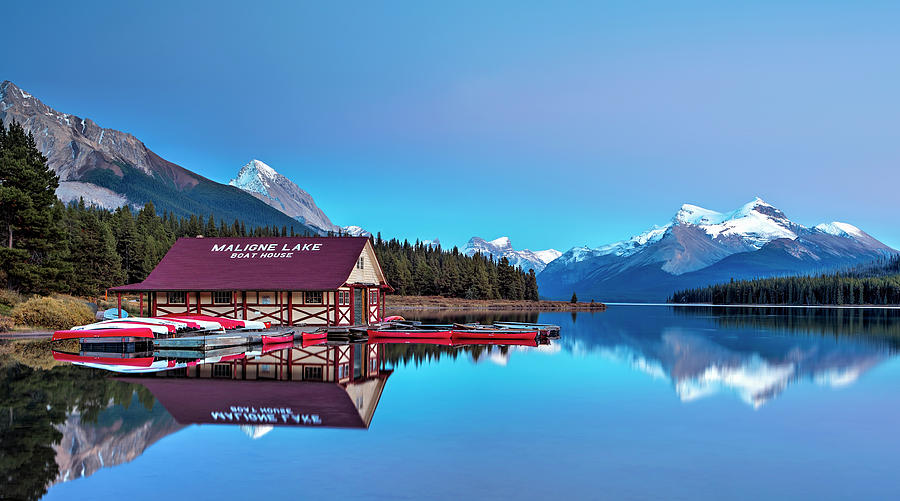
Alberta stretches from the vast plains to century-old pine forests, glaciers, canyons, lakes, and waterfalls marks a journey with magnificent panoramas, preserved by national parks. Alberta Canada holds the best tourist attractions in Canada and Alberta trip is ideal between May to November to experience the best weather and wildlife. The best tourist attractions in Alberta Canada include Jasper National Park, Maligne Lake, and its small islet, Spirit Island.
Maligne Lake
Who would have thought that a handful of trees could excite tourists from across the country? 22 km long, Maligne Lake has a small islet, Spirit Island, planted with a few proudly erect trees, with roots almost in the water. This is arguably the most photogenic place in Jasper National Park; Instagram has greatly contributed to its reputation. In summer, tourists can take a short cruise on the lake by motorboat, the premium version of which includes a stop on the islet. The more adventurous can instead rent a canoe or kayak at the Maligne Lake Boat House to navigate the glacial waters. Several hiking trails wind from the shores of the lake to the top of Bald Hills, at 2300 meters above sea level, from where you can enjoy the most striking view.
Some hiking areas around the lake are closed from November to February to preserve caribou’s habitat. Visit the Jasper National Park website and learn more about Alberta tourism and plan jasper vacations.
Elk Island National Park
At Elk Island National Park, nearly 700 bison live in semi-freedom in this area and you would find the place unique during a trip to Alberta Canada.
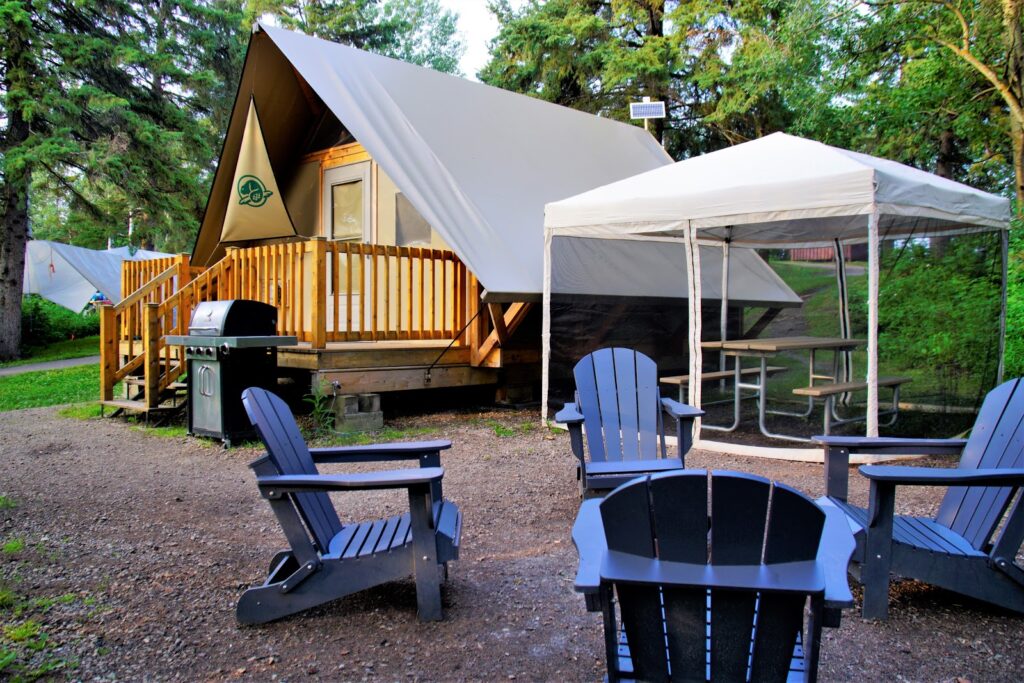
Located just 40 km east of Edmonton, the capital of Alberta, Elk Island National Park is the only walled park in Edmonton travel. Nearly 700 bison live there in semi-freedom, in an area of nearly 200 km². To observe these giants of the plains, it is better to come at dawn or at dusk, when the heat is not yet raging. About ten hiking trails wind through the park, including the one called Wood Bison Trail: a loop of about 15 km between lakes and forests. It is here that one would have the best chance of observing a herd of bison.
Avoid visiting the park on hot summer days. As the bison cannot stand the heat, they take refuge in the forest and move out of sight. The calving season takes place around June; it is the ideal period to see baby bison.
Icefield Parkway
Highway 93, linking Lake Louise to Jasper, called Route des Glaciers, runs for 230 km.
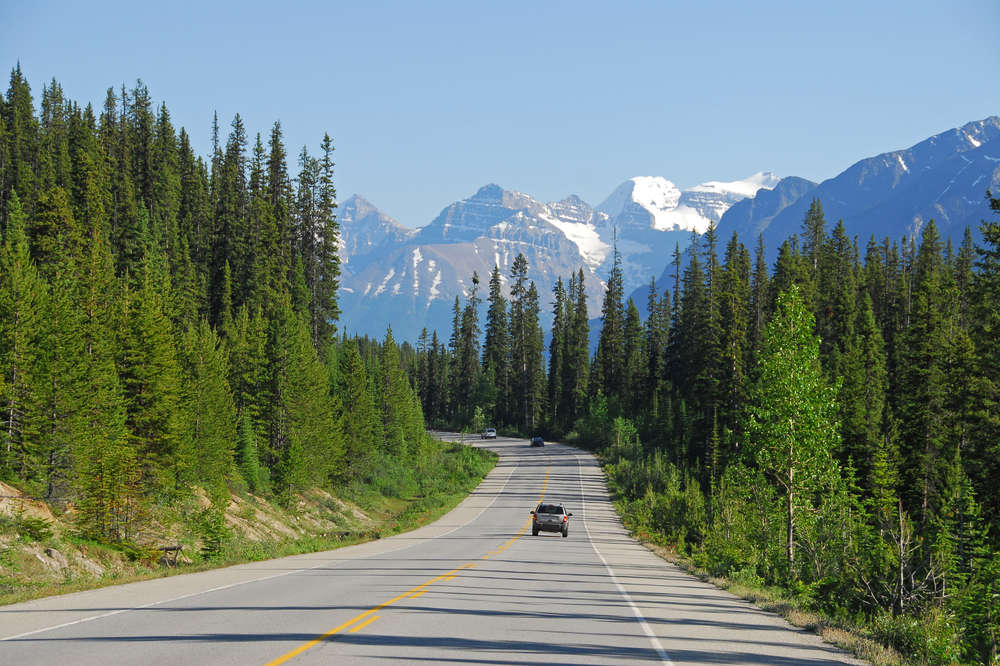
Its name already transports us to the snow-capped peaks. Linking Lake Louise to Jasper, Highway 93, called Route des Glaciers, unfolds its landscapes speckled with immaculate white over 230 km. Here, the snowfields persist even in the heat of summer. Among the must-see on the way, do not miss the Peyto Lake, whose turquoise blue, almost surreal, leaves tourists in awe. An easy path leads to the lookout in 10 minutes from the road. 200 km further, Mount Edith Cavell, dominating the landscape from the top of its 3363 meters, marks another highlight of the route. In summer, the paths lead to it cross meadows of wildflowers. Attentive hikers will observe the marmots, which complete this postcard decor.
In the middle of the course, the Columbia Ice field Glacier Discovery Center welcomes the thousands of tourists who parade every day in summer. The structure houses a very well-documented information center, a hotel, a cafeteria, and a chic restaurant. In the basement, an exhibition raises awareness of global warming.
Lake Louise
Depending on the light, the color of Lake Louise oscillates between turquoise blue and emerald green. See more Lake Louise Tourism website.
Alberta road trip inevitably leads to Lake Louise, perhaps the most iconic site in Banff National Park. The lake ticks all the boxes on the postcard if you are on Banff vacations. Depending on the light, its color oscillates between turquoise blue and emerald green. The rocky slopes covered with deep green fir trees are reflected in this peaceful mirror of water. For the best view of the lake during the Lake Louise vacations, seasoned walkers will follow the trail that climbs to Big Beehive Mountain. Along the way, the Lake Agnes tearoom provides a comforting stopover before tackling the more strenuous part of the hike. After about two hours of ascent, it is with a pounding heart and stiff legs that we reach the summit. Another must-see in the area is Moraine Lake, 15 km away.
In the middle of summer, the car parks located near lakes Louise and Moraine are often full as of 8 am. It is best to park in the auxiliary car park and use the shuttle service that serves the two lakes. Online booking is strongly recommended. Once at Lake Louise, a free bus goes to Moraine Lake, and vice versa. The shuttles run from mid-May to mid-October.
Johnston Canyon
Well laid out and accessible to all, the promenade consists of a long footbridge hanging from the cliff.
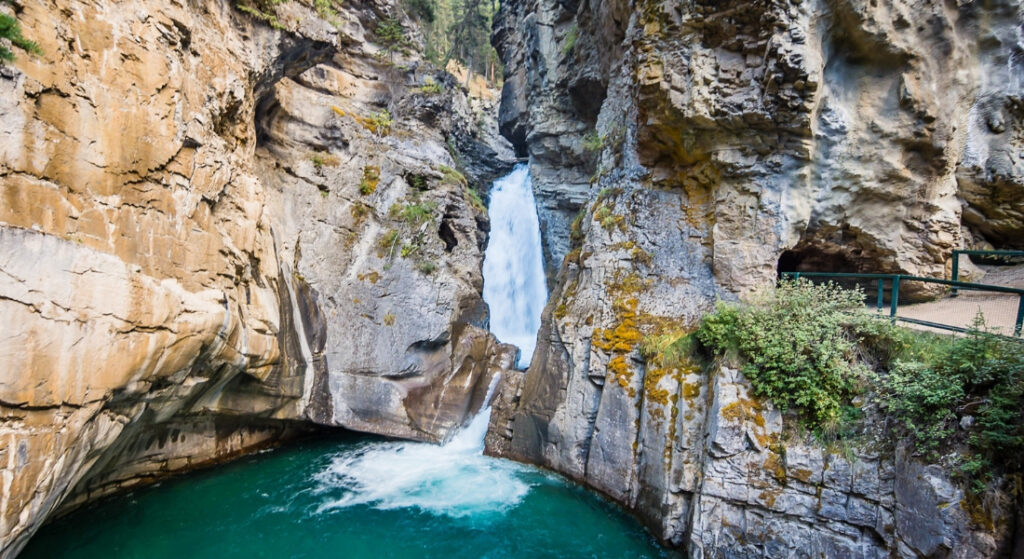
Frosted and immaculate in winter, tumultuous and turquoise in spring, the Johnston River is admired in all seasons. Just 25 km from Banff, Johnston Canyon is one of the region’s most enjoyable walks. Well laid out and accessible to all, the promenade consists of a long footbridge hanging from the cliff. From the car park, you can easily walk through a forest environment, there rocky, to go up the Johnston River to the upper waterfall, located 2.5 km from the car park.
Accessible to all, the site attracts a lot of visitors. As parking spaces are limited, taking the bus from Banff (line 9) is a good alternative to driving. The company Roam Transit serves the Banff road trip and the main attractions of the National Park, from mid-May to mid-September.
Banff Gondola and Sulfur Mountain
Fly over the fir forests in a cable car for 8 minutes to reach the summit of Mount Sulfur, perched at an altitude of 2,270 meters.
Boarding the cable car to attack Sulfur Mountain means: flying over the pine forests for 8 minutes to reach the summit at 2,270 meters. From there, you can walk to an old weather station in 15 minutes to admire the panorama. As far as the eye can see, Banff travel or Banff tour reveals the snow-capped peaks of its national park. Here is a good overview of what awaits tourists who come to hike in the region. The bravest will tackle the Sulfur Mountain trail on foot from the valley. 5 km in switchbacks in the forest and 700 meters of vertical drop put the thighs to the test, but what satisfaction once up there.
Before planning a Banff trip visit the Banff Jasper Collection website.
Calgary Stampede
The world’s best riders and cowboys compete at Stampede Park.
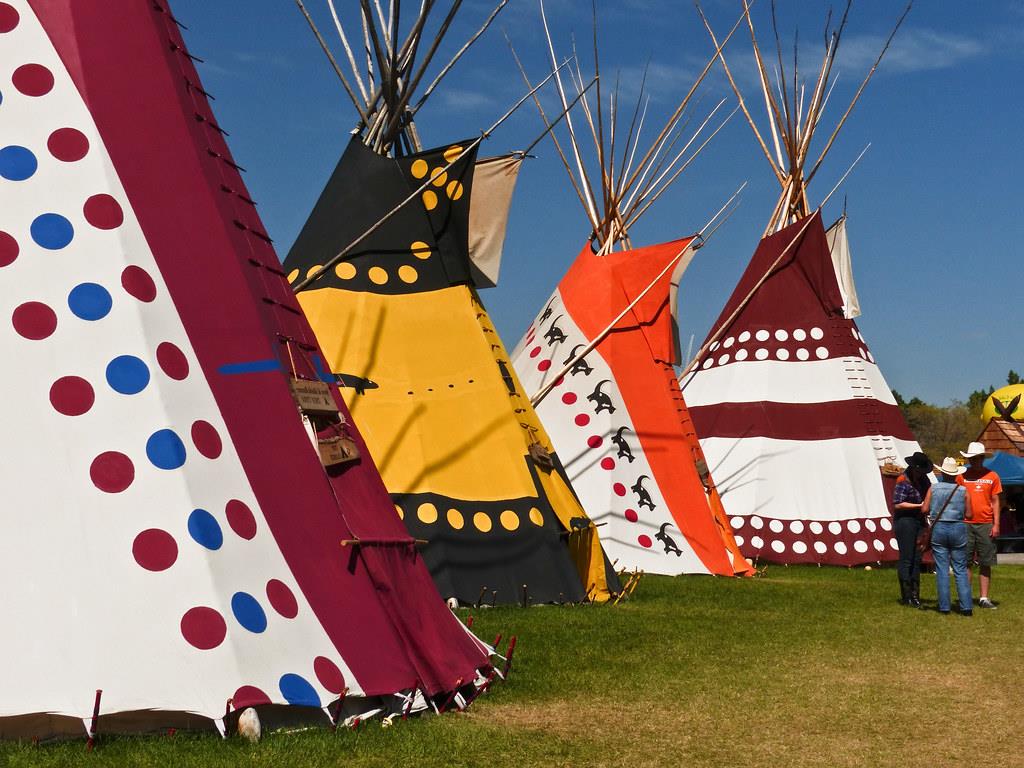
Each July, the Calgary Stampede attracts one million visitors on Calgary tours. For ten days Calgary travel, breeding professionals, rodeo enthusiasts, or simply curious come to soak up the festive atmosphere will meet in the largest city of Alberta to attend the festivities of this event. Agricultural fairs, costume parades, and country concerts punctuate a busy agenda and keep the city center alive. For the show, the real one, go to Stampede Park where the best riders and cowboys in the world compete. The mechanical bulls remain for tourists to learn about the art of bull riding. One hand in the air knees tight on the sides of the beast and let’s go!
If you are planning to attend the Stampede, it is best to book accommodation in Calgary months in advance. This recommendation also applies if you land or take off from Calgary during the Stampede period and the schedule requires an overnight stay. Please note, hotel rates are soaring during this period.
Royal Tyrrell Museum
The Badlands, these vast Canadian plains, hollowed out by dry and winding canyons, are well known to paleontologists.
140 km from Calgary, the largest city in the province, stretch these vast Canadian plains, hollowed out by dry and winding canyons. Well known to paleontologists, this region with lunar landscapes hides dinosaur fossils in these arid soils. The Royal Tyrrell Museum exhibits some of the finest specimens, such as the fully reconstructed skeleton of a Tyrannosaurus Rex, dubbed “Black Beauty” for the black color of its bones and it looks impossible to remain unmoved in front of this giant with sharp teeth. Next to it, the Canadian grizzly bear almost looks like a teddy bear. In total, the collection has around 130,000 fossils and is well worth a visit from Calgary. The outdoor path leads to a belvedere offering a panorama over the valley and millions of years of history.
The fascinating museum alone justifies a day trip from Calgary. But you can also walk the hiking trails around Drumheller and discover the beautiful region of the Badlands.
Waterton Lakes National Park
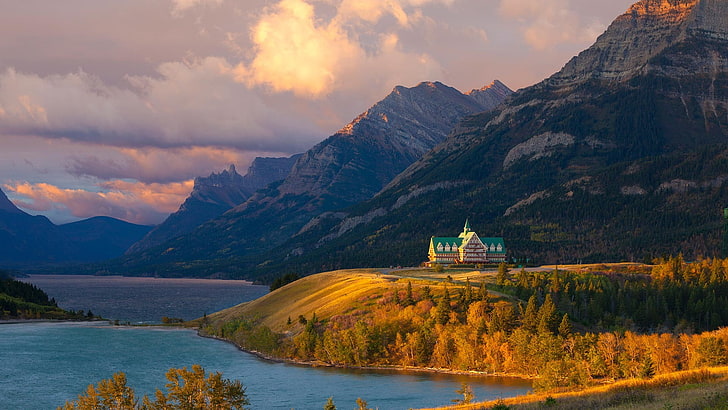
The road to it is a dead end. Further south, it is the border with the United States. Only Lake Waterton seems not to care about this division of territory and extends without scruple over the two countries. Ravaged by fire, Waterton Lakes National Park is slowly rising from its ashes. Today, it is home to 200 km of trails and offers hiking possibilities ranging from 30 minutes to 3 days, something to satisfy both beginners and seasoned trekkers. The imposing Prince of Wales Hotel, overlooking the lake, offers a comforting stopover after a long walk. In the lobby, adorned with a purely English style, you can enjoy an afternoon tea gourmet while enjoying the panorama. From scones to kilted waiters, everything is there to immerse us in a British atmosphere.
Canadian Wildlife
If the immensity of the landscapes sometimes leaves you speechless, it is difficult on the other hand to contain your enthusiasm when a bear walks on the edge of the forest. The vehicles slow down, creating sporadic traffic jams of onlookers, their faces taped to the window. And who goes there? Two cubs emerge from the tall grass, still unsteadily and the whole family continues on their way, indifferent to the line of vehicles and the smartphones pointed at them. After the postcard landscapes, wildlife is the other great spectacle of a stay in Canadian national parks. Bears, grizzly bears, elk, moose, mule deer, bighorn sheep, and coyotes inhabit these vast spaces. Some of these mammals, not shy, are easily observed, such as elk.